Hayek LabUniversity of Texas Medical Branch

We study how inflammation contributes to cardiovascular and kidney disease, and how to protect the heart in patients with cancer.

The Hayek Lab works on suPAR, a receptor that immune activation releases into the blood, where it signals to distant organs, and on the cardiovascular care of people with cancer.

Two programs

Inflammation and Cardiovascular-Kidney-Metabolic Disease

Heart, kidney, and metabolic disease tend to strike the same patients, and inflammation runs through all three. We study the immune signals that pass from one organ to another and turn them into biomarkers clinicians can act on.
The full program

Cardio-Oncology

Patients with cancer often carry cardiovascular risk before treatment starts, and the treatment can add to it. We work out which patients are at risk, how to catch injury early, and how to treat it without taking effective cancer therapy away.

The full program

Inflammation & Organ Injury

From immune activation to distant signaling.

Membrane uPAR focuses proteolysis where immune cells meet tissue. Immune activation raises suPAR production and releases it into the blood, where it scavenges urokinase and signals through receptors on cells of distant organs. When that signaling is persistent and inappropriate, it may contribute to disease there.

Schematic: membrane uPAR, soluble suPAR in the blood, and receptor signaling on cells of distant organs.

Three stages. On the membrane of a source cell, uPAR sits on a lipid anchor with its three domains, D1 to D3, stacked outward; with urokinase bound, it localizes proteolysis to the cell surface. Immune activation increases the production and release of suPAR into the blood. There, soluble suPAR scavenges urokinase away from cell surfaces, and it docks on receptors of other cells, such as αvβ3 integrin, the receptor for advanced glycation end products (RAGE) and the formyl peptide receptors (FPRs), where it triggers receptor signaling, in the kidney, the vasculature and metabolic tissue. Persistent, inappropriate signaling may contribute to disease.

Schematic, not to scale. Adapted from Reiser, Hayek & Sever, J Clin Invest 2026 and Hayek & Dryer, Circulation Research 2026.

Signature work

The papers that built the suPAR program, in order.

  1. 2015Discovery

  2. 2017Mechanism

  3. 2020Generalization

    Soluble Urokinase Receptor and Acute Kidney Injury

    New England Journal of Medicine

  4. 2022Causation

  5. 2026Synthesis

Cardio-Oncology

Cancer therapies injure the heart on different timescales.

Cardio-oncology is the cardiovascular management of patients with cancer. Cancer therapies injure the heart through largely unrelated mechanisms and on different timescales. No single test or surveillance schedule detects them all.

How long after treatment each kind of heart injury appears A logarithmic time axis running from one day to thirty years after treatment, with four bars. Injury from chimeric antigen receptor (CAR) T-cell and other cellular therapies appears earliest, between about two days and six weeks, most often around two weeks. Immune checkpoint inhibitor myocarditis follows, between about three and eleven weeks, most often around five weeks. Injury from anthracyclines and from therapy directed at human epidermal growth factor receptor 2 (HER2) spans about one month to one year, most often around three and a half months. Injury from radiation, and late effects generally, begins around five years and continues past thirty. The four ranges barely overlap, which is why no single surveillance schedule can catch all of them. treatment CAR T-cell and cellular therapy around 2 weeks, tracking the cytokine storm Checkpoint inhibitor myocarditis around 5 weeks, some after a single dose Anthracycline and HER2-directed around 3.5 months; 98% inside the first year Radiation, and late effects years to decades, with no threshold dose 1 day 10 days 100 days 3 years 30 years
Each bar spans the range over which that injury usually declares itself, and the mark inside it is the typical case. The axis is logarithmic, so every step along it is ten times the last: these are further apart than they look. An injury arriving in a fortnight has to be caught by monitoring through the acute illness, and one arriving in a month by surveillance during treatment. One that tracks a cumulative dose has to be caught by stratifying risk before the first dose is given, and one arriving in decades by a plan that outlasts the oncologist who made it. CAR T-cell stands for chimeric antigen receptor T-cell, and HER2 for human epidermal growth factor receptor 2.

Selected papers

  1. 2023

  2. 2022

  3. 2023

  4. 2024

Publications

  • 227Peer-reviewed publications
  • 29,000+Citations
  • $10M+Research funding
  • 54Lab members, past and present
Publications per year, 2008 to 2026, by program
YearInflammation & Organ InjuryCardio-OncologyOther
2008001
2011200
2013105
2014507
2015608
20161002
20171307
2018624
2019452
20201440
20212071
20221960
20231180
20241091
2025840
2026870
Inflammation & Organ Injury 137Cardio-Oncology 52Other 38

All 227 publications

Latest

People

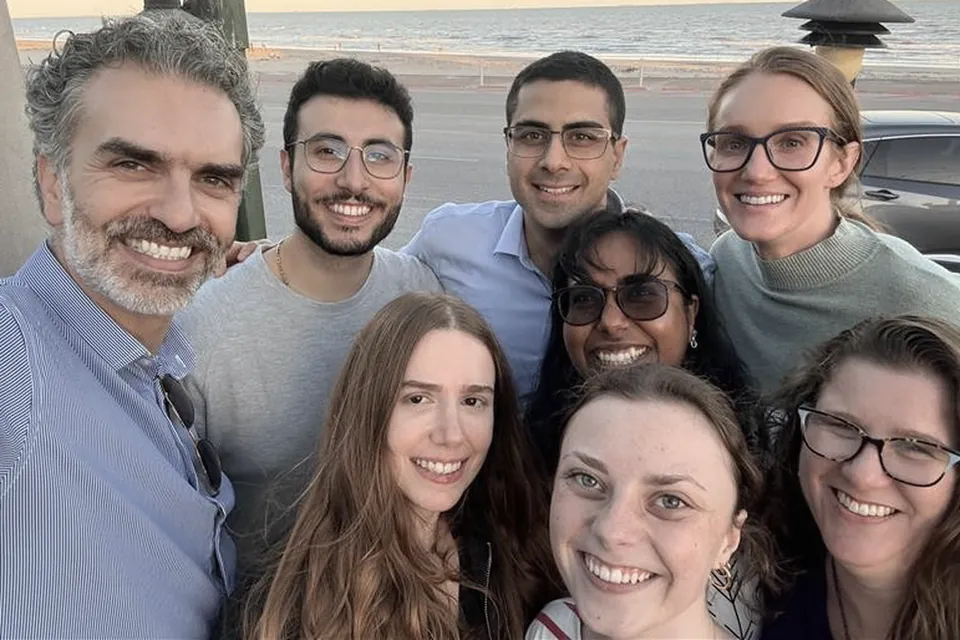
Eight members of the lab outdoors by the water in Galveston
The Galveston group, out by the water.

54 people have worked in this lab, in Galveston and, before it, in Ann Arbor.

Meet the team

We collaborate with academic groups, health systems, and industry partners.

Biomarker validation, ancillary studies to ongoing trials, and registry-based outcomes research. If you have a cohort, an assay, or a compound and a cardiovascular question, we are interested.

Support our research. Gifts fund pilot studies and biospecimen collection. To direct one to this lab, contact UTMB Development or write to us.